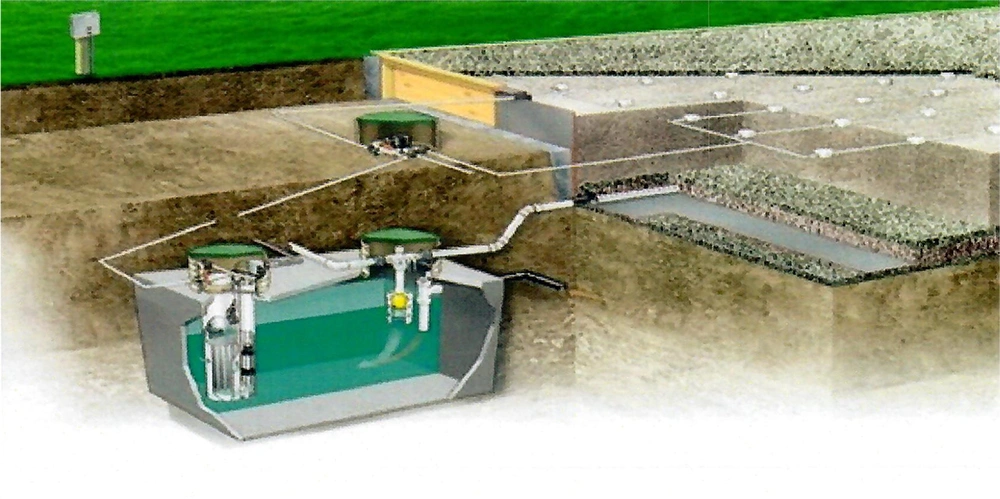
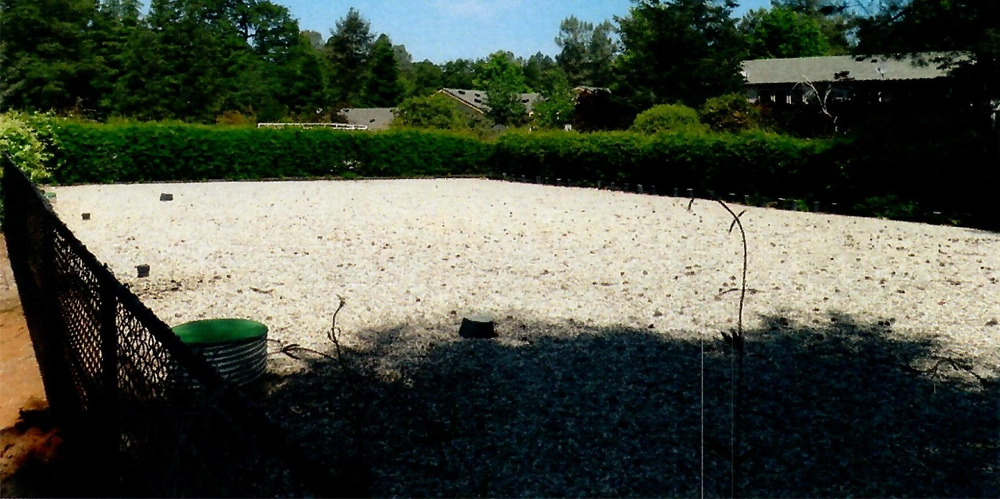
- SERVICES

Intermittent, Bottomless, and Recirculating Sand Filters

“Our sand filter systems provide advanced wastewater treatment by filtering effluent through layers of sand and natural media. Whether intermittent, bottomless, or recirculating, they deliver cleaner, safer water flow and long-lasting system reliability.”
- What is a Sand Filter?

There are 3 Types of Sand Filters
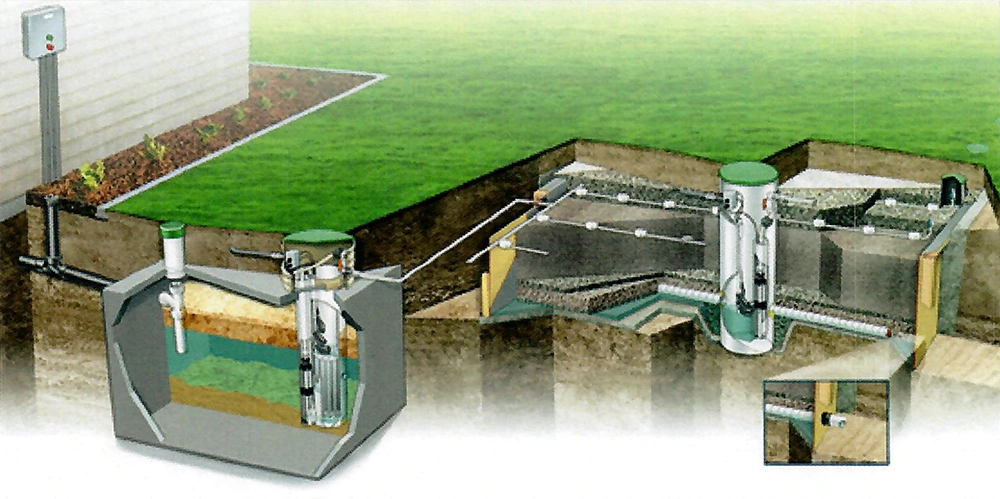
ISF
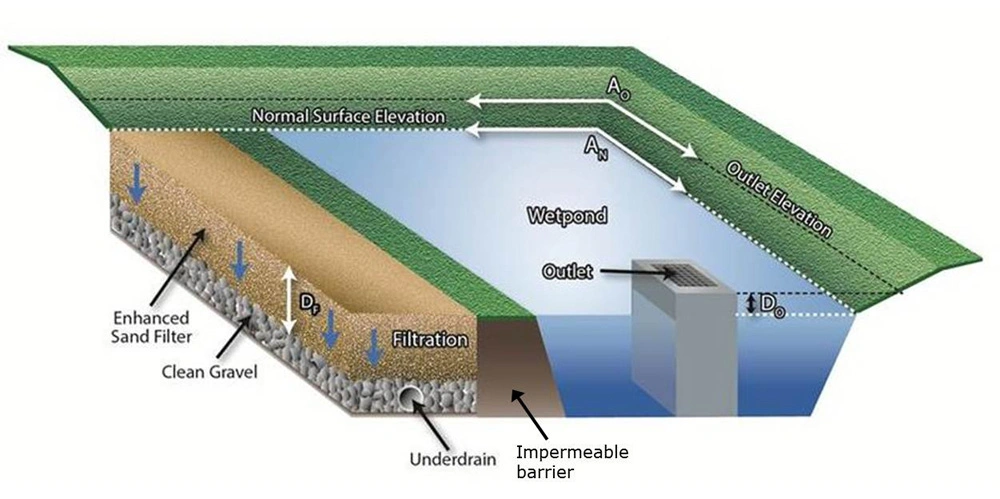
Intermittent Sand Filter

BSF

Bottomless Sand Filter

RSF

Recirculating Sand Filter

A sand filter is an alternative type of septic system used to pretreat effluent discharged from a septic tank. The sand filter discharges the pretreated effluent to either an absorption field or directly below the sand filter unit itself. A sand filter that discharges effluent directly below the sand filter unit is called a bottomless sand filter. This type of sand filter is only used where rapidly draining soils such as sands or gravels are present. In either sand filter type, a very high quality (clean) effluent is discharged for final treatment in the soil. The sand filter represents a tertiary treatment system where primary treatment of the effluent occurs in the septic tank, secondary treatment of the effluent occurs in the sand filter, and tertiary treatment of the effluent occurs in the soil. The sand filter is used to insure that surface water and subsurface water resources are not adversely impacted by effluent discharges from a residence or a commercial structure. Parcels with soils that evidence high water tables, parcels that have rapidly draining soils overlying shallow water tables, parcels that are in close proximity to surface water bodies or parcels with limited development area are all potential candidates for the use of a sand filter system.

A sand filter, in simple terms, is nothing more than a biological treatment unit that utilizes natural processes to treat and cleanse the effluent. Effluent that passes through a sand filter is broken down and consumed by aerobic bacteria that populate the individual sand grains of the medium sand in the sand filter. Additionally, the relatively large surface area of the individual sand grains in the medium sand provides an area of high ionic potential and an area which maintains a constant exchange site for gases and oxygen which facilitates the treatment and destruction of the constituent viral, biological and chemical compounds contained in effluent. In other words, a sand filter utilizes beneficial bacteria, oxygen, and chemical reactions to treat and purify the harmful components of the effluent.

Intermittent Sand Filter (ISF)

The intermittent sand filter is a specially prepared bed of sand on which effluent from primary treatment, or from trickling filters or secondary settling tanks may be applied intermittently by using troughs or perforated pip distributors. The effluent from the filter is removed by an under-drainage system. An intermittent sand filter provides decomposition of wastewater constituents by bringing the wastewater into close contact with a well-developed aerobic biological community attached to the surfaces of the filter media (certified ASTM-33 sand). This process requires unsaturated downward flow of the effluent through the filter media. This filter media is contained in a watertight vessel made of concrete or a PVC lined pit. Proper function requires that the influent from the pump chamber be distributed over the filter media in controlled, uniform doses. The only accurate way to ensure proper dosing is to install a quality time-dose control panel. This panel will include (among other items) a timer which controls how often the pump will deliver effluent to the sand filter. The contained vessel will have several layers of media. Within the contained sand filter vessel you will most likely have a layer of drain rock at the bottom near the under-drain, a layer of 24" of ASTM-33 certified sand, approximately 9" of drain rock near the surface and a series of laterals (PVC pipes) connected to the manifold which effluent gets delivered from the pump chamber. The laterals have a series of evenly spaced holes (orifices) throughout the length and usually long turn 90-degree elbows at each end for maintenance, cleaning, and testing. Usually, the laterals & drain rock will have approximately 12" of good topsoil covering the vessel, which allows good air exchange within the system. PVC monitoring ports are likely installed at or above grade level in several locations within the contained vessel to monitor the liquid level in the sand filter. After the effluent gets treated (filtered) through the sand filter media, it will either flow downward into a slotted or perforated pipe with gravity drains into a disposal area (drain field) or the effluent inside the sand filter will flow into a pump well that is installed within the sand filter itself. If a pump well is installed within the sand filter, that "treated", filtered effluent will get pumped to the final disposal area (drain field).

Bottomless Sand Filter (BSF)

A typical bottomless sand filter consists of a Liner covering the sidewalls, manifold kit, and control panel. Wastewater, having received secondary or better treatment in advanced treatment unit(s), is intermittently pressure dosed using a programmable timer to a bed of specified sand media. Wastewater is dispersed over the bottomless sand filter surface in a PVC pipe distribution network surrounded in peastone. Wastewater trickles down in unsaturated thin film-flow through the sand media, where physical and biological treatment occurs. The small size of particle media promotes straining and subsequent removal of pathogenic organisms. The treated wastewater (bottomless sand filter effluent) infiltrates into the underlying native soil, where it may receive additional treatment as it percolates down through air-filled soil pore space, before entering the saturated zone.

Recirculating Sand Filter (RSF)

Recirculating filters using sand, gravel, or other media provide advanced secondary treatment of settled wastewater or septic tank effluent. They consist of a lined (e.g., impervious PVC liner on sand bedding) excavation or structure filled with uniform washed sand that is placed over an underdrain system (see figure 1). The wastewater is dosed onto the surface of the sand through a distribution network and allowed to percolate through the sand to the underdrain system. The underdrain system collects and recycles the filter effluent to the recirculation tank for further processing or discharge.

Recirculating sand filters (RSFs) are aerobic, fixed-film bioreactors. Other treatment mechanisms that occur in sand filters include physical processes, such as straining and sedimentation, which remove suspended solids within the pores of the media. Also, chemical sorption of pollutants onto media surfaces plays a finite role in the removal of some chemical (e.g., phosphorus) constituents. Bioslimes from the growth of microorganisms develop as films on the sand particle surfaces. The microorganisms in the slimes absorb soluble and colloidal waste materials in the wastewater as it percolates over the sand surfaces. The absorbed materials are incorporated into a new cell mass or degraded under aerobic conditions to carbon dioxide and water.

The basic components of recirculating filters include a recirculation/dosing tank, pump and controls, distribution network, filter bed with an underdrain system, and a return line. The return line or the underdrain must split the flow to recycle a portion of the filtrate to the recirculation/dosing tank. A small volume of wastewater and filtrate is dosed to the filter surface on a timed cycle 1 to 3 times per hour. Recirculation ratios are typically between 3:1 and 5:1. In the recirculation tank, the returned aerobic filtrate mixes with the anaerobic septic tank effluent before being reapplied to the filter.
- What Sets Us Apart

Why Choose
Hydrotec Solutions?

Expert wastewater & Sand Filter system specialists

Reliable, cost-saving system solutions

Fast, responsive service you can trust

Contact Us

Need reliable wastewater or STEP system services? Contact us today to schedule your consultation or service. We’re here to keep your system running efficiently and worry-free.